Showing posts with label walking tour. Show all posts

Sunday, February 12, 2017

What to do and what to visit at Porto in one day?

What to do and what to visit at Porto in one day?

The most common answer you will have when asking such question to a “tripeiro” is: “you can’t”.
“tripeiro” - the natives of Porto are known in Portuguese as "tripeiros"
You will understand that the answer results from loving too much the city and when you will visit it you will easily get the reason why, it’s a gorgeous city, very photogenic in fact.
However sometimes the reality is that we only have one day so we will have to cook with the potatoes we have.
By reducing the time to just one day we will have to select only a few places to go in a wide variety of interesting sites.
My suggestion for you is: a morning walk, a lunch with products from a local market and a monument/museum visit during the afternoon.
Does it seems like a plan?
Yes, it will be a busy day.

Morning walk in Porto:

Please download a map that will guide you on a walk where you can visit some of the most iconic sites in Porto. Please  print the map in a A3 format or use it in your smartphone as a pdf.
Is a 6,5Km (4mi) stroll, perfect for a sunny morning and it will leave you enough time to stop for pictures and a coffee on the way.
The suggested walk will take you to several spots where you can take panoramic photos from Porto.
In a future post I will describe what can you see during this walk by identifying the numbers you can see written on the map.

Lunch with products from a local market:

During your morning walk you can visit a market identified as number 3 on the map, is the Bulhão market.
There you will find fresh products like fruits and vegetables and around there you will also find some old traditional groceries shops. I’m sure you can get there plenty of items to arrange a snack for you.

Monument/museum visit:

During the afternoon I suggest you to visit one of the following monuments/museums:
Enjoy your day and do not hesitate to send me an email you case you need to exchange some ideas.
David Monteiro

Saturday, January 28, 2017

River Bestança, beyond the Douro Valley wine region - Portugal

The Douro Valley wine region is the oldest demarcated wine region in the world.

Is was established in 1756 by Marquis de Pombal, the Portugal's prime minister during the time of the king D. José I.
In the previous post I described a walking tour trail I lead once in a while that takes place in the demarcated wine region. It's a wonderful place where you can see all the landscape covered with vineyards.
However the demarcated region does not cover completely the Douro Valley and there is a part of the valley that was not "affected" by the rules of the demarcated region and the landscape is totally different, although being so close to each other.
The river Bestança valley is a hidden jewel even for Portuguese people. Here the trails are old paths that were used by farmers to access to their farming lands or where they still go with their cattle.
In the river Bestança Valley you can find both the lifestyle of 100 years ago but also quite interesting hotels, like the case of Hotel Porto Antigo or manor houses that are totally equipped to receive guests.
Diversity is probably one of the strongest characteristics of the Portuguese territory where one do not have to go too far to be in a completely different scenario.
Enjoy.
David Monteiro

Monday, January 23, 2017

The Garrano Horse at Gerês National Park, Portugal

Wild horses in Portugal at Gerês National Park.

In a territory with such ancient boundaries, such as Portugal, and where the human presence is almost everywhere, there are not so frequent wildlife sightings and when that happens, as it was in this case, it is always an exciting moment.
Garrano is a breed of Iberian horses. We often tend to refer them as being Portuguese but the fact is that the animal knows no boundaries and they can be seen both on the Portuguese side and on the Spanish side.
On the Spanish side the Gerês (Gerês National Park) is called Xures, very similar.
These are horses of small stature, wrongly often referred to as ponies, adapted to the harsh conditions of the Gerês and with working horse characteristics.
It's difficult to find the word to express how much I love seeing these free animals in the wild.
They are no longer in danger of extinction as once they were, it is a sign that there is hope in the future of coexistence between humans and wildlife.
This was a moment to remember.
David Monteiro

How to divide the time to spend nine days visiting the Azores?

The Azores is an archipelago of the Portuguese territory constituted by nine islands and these islands are organized in three groups accordingly with their relative position and proximity: Oriental Group, Central Group and Occidental Group.

Oriental Group: Santa Maria Island and São Miguel Island;
Central Group: Pico Island, São Jorge Island, Faial Island, Graciosa Island and Terceira Island
Occidental Group: Flores Island and Corvo Island.
There are lot’s of websites where you can retrieve geographical information about the Azores so I won’t spend much time on this subject. Also to know its geographic position you can go to Google Maps.
In spite the Azores being part of Portugal, is totally different from the mainland and is far from sufficient to say that you will find there a unique environment, is like visiting a different country but with same language although with specific accent.
In between the several Azorean islands you will also find huge differences. While some islands are green, with dozen of lakes and waterfalls, others gives you dark landscapes colors with impressive mountains.
These differences in between islands are not only in the landscape but also in their  traditions and ways of being. At São Miguel island you will find a considerable size island, all green and quite exuberant, with an architecture based on black and white buildings and,on the other hand, just to give an example, Pico island is dark and dry because of the volcanic dark stone and the locals love to paint their dark stone houses doors with red colour … the result is fantastic.
With nine islands and also considering the difficulties of access to some of them once in a while due to weather conditions, is totally impossible to visit them all in one week, at least it doesn’t worth your while to do it like that.
If you’re planning a one week tour, or 9 days for that matter, you will need to make choices regarding to what islands to visit.
In this post I will focus myself in a 9 days tour but later I will write another post considering a two weeks tour and these two possibilities will be very different.
Naturally that the answer will be that this will depend on your personal preferences. However, in case you are more willing to go trekking the answer will be to go visiting islands like Flores or São Jorge but if you are more of a general tourist maybe plan to spend more time at São Miguel and Terceira.
For the sake of the explanation I will divide the people that are interested in visiting the Azores in two big groups knowing that I’m taking the chance of leaving many possibilities out of this division:
Relaxed Group - Those that are more like a general tourist. Want some cultural activities, not too deep, some walks, not to far or not taking too much time, take some pictures, have some relaxation moments but get to know the place.
Active Group - Those that are interested in knowing the place while doing some physical activities like walking, maybe trekking, or scuba diving, photography, sea kayaking, etc, although are also interested in getting to know the place.
Note that, things like local food and wine tasting, getting to know people and some relaxing are included in both groups, naturally.
I know that splitting the people in two groups like this is probably not even fair but this is a blog post not a scientific study … give me a break.
So, the question is now “How to divide the time to spend nine days visiting the Azores?”
Please bear in mind that I don’t like to travel with too much tide schedules or be all day long rush rush but I also need to feel that I’m taking the most of my time in a balanced way. What is good for me is not necessarily the best for you so you will do your own decisions.
Relaxed Group: mix tour with some cultural activities, some photo opp’s and some walks
3 days at São Miguel island + 2 days at Pico island + 1 day at São Jorge island + 3 days at Terceira island
Active Group: plenty of opportunities for walking, scuba diving, serious photography, surf, rock climbing etc - two possibilities
3 days at São Miguel island + 2 days at Pico island + 2 days at São Jorge island + 2 days at Terceira island
or
3 days at São Miguel island + 3 days at Flores island + 2 days at Pico island + 1 day at São Jorge island
This is only an idea on how to split time in between islands, you will decide what is best for you.
The Azores is in my short list of favourite destinations, I’ve been travelling there for many years and I know deeply all the islands.
There are infinite possibilities to do a wide variety of activities like walking, photographing, lay down on the beach, jumping from cliffs, cultural visits, you name it.
Is really difficult to select some islands to visit in one week, leaving out of the choice so many other wonderful places but this is real life with its limitations of time and money.
In this post I did not consider the logistic difficulties you can find when booking flights to the Azores, that will always depends of where do you come from. Although I consider how hard/easy is to move from one island to the other also taking into account how far in time are they from each other.
Later I will write a series of posts regarding each island and with some ideas of what can be done here and there adding some information to what can be already found in the internet. Also I will also explain the reasons for the above selections.
Have fun,
David Monteiro

Monday, January 4, 2016

River Ébron canyon – Spain


I love to think that there are trails that have a different objective than the walk itself and this one is a perfect example.

The river Ebron it's an interesting case of a river that starts and finishes in the same river. It's a tributary of the river Turia and in the same river has its mouth.

In its short path, the river Ebron crosses a canyon that was named "Estrechos del Ébron" (the Ébron strait)  and it was built here some funny iron infrastructures that allows people to walk in the canyon without wetting their feet.
Exactly, you will be able to walk almost on the water. The maximum height is about 1,5m high.
Funny isn't it?
To access to the canyon area the trail was equipped with some iron structures that helps you "climbing" some rocks … very easy.
In the way in will find some places where you won't resist having a bath in crystal clear waters.
Be sure to came here during a hot summer day because is the best time.
The canyon walls will provide the necessary shade and the water will be refreshing.
This is what I call a walk with a hidden agenda :)
Have fun.
David Monteiro
Location: Tórmon, Spain

Sunday, June 23, 2013

Climbing "via ferrata" a wonderful adventure

A via ferrata (iron way) is a climbing route where you will find metallic structures installed on the rock walls.

According to some sources, this kind of climbing routes had their origin in Italy, where the alpine guides of Madonna di Campiglios (Dolomites) started to place some support metallic structures to facilitated their tours with customers.
This idea was than very well received by the Italian army that came to develop the concept between 1915 and 1918 allowing their soldiers to progress on apparently inaccessible mountain terrain and getting some advantage towards the enemy that couldn’t imagine such structures.
After the world wars, from a military use the “via ferratas” started to have only a touristic use and to be spread out to other countries.
More recently there was a great effort by the Spanish authorities in the direction of installing many “via ferratas” of excellent quality that allow an excellent sensation of adventure tothose that are more experienced climbers as well to those that are not so experienced.
In the area of the Spanish Pyrenees there are has a dispersed set of excellent examples of “via ferratas” and that gives the possibility of fantastic vacations.
Although the “via ferratas” allow an easier progression than climbing on the plain rock, the use of these structures respect a set of security rules that, in case you are not familiarized such techniques is preferable to use the services of a guide.
The via ferratas are graded in many ways. There are some difficulty level grading that can go from an easy level of 1, also referred as A, or an extremely difficult level or 5, also referred as E. You can find other kinds of grading that involve other criterias suchs as a psychological factor of the “via ferrata”.
During the tours I promote to climb via ferratas, concerning the lodging terms I opt to present possibilities of reasonable economic lodging but with the basic comforts as privative bath. However, is always possible to find lodgings in accordance with one needs and pocket..
A memorable adventure.
David Monteiro

Saturday, June 15, 2013

The Way of Saint James

What is the Way of Saint James? How did it appear? Why is so important?


More than a pilgrimage is a spiritual journey within us, steps towards to self-knowledge.

The History of the Way of Saint James dates back to the time of the birth of Christianity.

In the middle ages pilgrims came from all over Europe on the road to Santiago de Compostela with the intention to pay a promise or any other religious intent. In this way they contributed to what would later be called the Way of St. James or, as it is known in Spain, "El Camino".

After an impressive growth over the centuries it felt abruptly to the point of to be counted 40 pilgrims, during the 19th century.

But something happened that made the flame burn again and in 1999 an impressive number of 155,000 pilgrims were counted.

What happened?

This is a long story that I will tell in a few posts.

Keep tuned.


David Monteiro

Monday, June 10, 2013

Trekking Tours - what are


Trekking tours are tours where the participants will walk several days autonomously in mountain environment. By autonomously I mean having in one’s backpack all that will be needed for the tours days.

Well, in my trekking tours I usually use mountain huts to spend the night and is also where we can have our meals. I do not usually camp unless when the guests expressively ask for that.


The mountain huts are constructions, houses type, that can be found n isolated places in mountains as it is the case of the photo that if it sees here to the side.
In these huts you can sleep in huge rooms that can hold 20, 30, or more persons, depending of the capacity of each hut. In some huts you will find bunks and in others you will find wooden decks with mattresses and blankets where you and sleep.

In each tour day you will have a certain trail to accomplish, usually until the next hut.
The use of huts will prevent you from carrying all the gear and all the food, allowing you to enjoy more the landscape and the trail itself. In these huts you also have the possibility to meet other people that come from other countries and these sort of moments are something that always makes part of the stories we will tell later.

The trails we will accomplish are adjusted to the difficulty level announced in the tours brochures.
Only for being a mountain trekking tour does not mean that will be demanding. If in the brochure is referred to be an easy level tour so it will be easy (for a common person) however if the tour is classified as strenuous so you can also count on that as well.

Are you ready to join me for a trekking adventure?
I will be waiting for you.


David Monteiro

Tuesday, May 7, 2013

Walking the river Cares Gorge - Picos da Europa

Walking the river Cares Gorge will give you a day to remember.

You can locate Posada de Valdeon on the map, "Google it", in the heart of Picos de Europa National Park, in the autonomous community of Castile and León, Spain, and from there you will take your way to Caín ... where the road ends.
Can we go somewhere from here?
Not driving for sure, only walking we can move forward.
Returning to our map, we will see a river that unites Caín to Poncebos, is the River Cares.
The space between these two locations appears on the map as being a mountain range with peaks over 2.000m high and with many steep slopes surrounding the Cares Gorge.
Can it be crossed?
Yes, we can cross this gorge and you will find one of the most interesting walking trails of the National Park and probably of Spain, the Cares Gorge / La Garganta del Cares. It is a very deep canyon where runs the Cares River through all its extension, uniting Caín to Poncebos.
It’s a 12km / 7.5mi walk, without much elevation gain or loss, always following along a trail that is, for most of its length, about 1, 5 m wide.
Between 1915 and 1921 the "Sociedad Electra de Viesgo" built a canal that would drive the Cares River waters from Caín to the hydroelectric of Poncebos. The result of this work is the canal that nowadays we can see along the trail which has 71 tunnels and where the water will be constantly appearing and disappearing.
However, there was always many conservation problems and between 1945 and 1950 a new canal had to be built next to a new trail and that is the path that we can walk. In some photos you can still see the old trail on a lower lever along the river.
After walking the 12 km long trail we get to Puente de Poncebos where we can find some terraces and then will be the perfect time to drink a beer and eat some tapas, preferably from Cabrales cheese, a local cheese made with milk from sheep's, goat's and cow's with very intense flavor and a characteristic mold, typical of the region.
This walk is part of one of the tours I'm constantly offering due its natural beauty and also because it is one of a kind.
I'll be waiting for you.
David Monteiro
Please check the original article at my blog in Wordpress

Thursday, April 25, 2013

Picos da Europa - Magic Mountain - Walking Tour


PICOS DA EUROPA - MAGIC MOUNTAIN
moderate level walks

In the eighth century AD Christians gathered in these mountains fleeing from the Moorish invasion. This natural barrier has proved so efficient that it was from here that the Christians started to reconquer the lost territory, a movement called “Reconquista” (conquering the lost lands).postit
These mountain formations are located in the Cantabrian Mountains and they cover the Spanish provinces of Asturias, Cantabria and Castile y León.
The combination of its average altitude with its proximity to the sea allows you to simultaneously enjoy the view of snowy peaks while tasting delicious cheeses and wines on a sunny terrace by the sea.
picos001This tour was designed for those who love moderate active vacations. Days are filled with activities like hiking and guided visits that allow you to better enjoy the several locations and know the culture of this magnificent region.
For photography lovers there will be plenty of photo opportunities, from wide open spaces with mountains that rise to the sky to fabulous details.
I’m counting on you!
OLYMPUS DIGITAL CAMERAOVERALL PROGRAM
Day 1 - Landing in Madrid - The capital city of Spain and also the largest Spanish city. You will be landing at the Barajas Airport where we will be waiting for you.DSC_1013
Day 2 - From Madrid to Cain - We will meet you at your hotel in Madrid to pick you up to Picos da Europa. During the transfer you will have the opportunity to have walk in Burgos where you can visit the Cathedral of Burgos declared World Heritage Site by UNESCO.
Day 3 - River Cares Gorge - The famous “Garganta del Cares” (River Cares Gorge) perhaps the most emblematic walk around.
This is a moderate level 12km walk on uneven terrain where most likely you will find school children and/or families walking the trail.
Day 4 - From Bulnes to Sotres - “Bulnes la Villa”, a small village which can only be accessed using the funicular (our case) or walking the long hike up along the hillside. From Bulnes and walking by the “Coll Pandebano” we will arrive to Sotres. In the meantime we will take some pictures from the Naranjo de Bulnes.
Day 5 - Hermida’s Canyon - In between the Massif Central and the Eastern Massif we will walk along the river Deva on some trails used by the trout’s fishermen. The sounds of running waters are very relaxing and there are always possibilities to meet some local people.
Day 6 - Fuente Dé - The Fuente Dé cable car will take us to the plateau where we will start our walk to a mountain hut called “Cabaña Veronica”. These wide open views are breathtaking and quite different from previous landscapes which adds diversity to the tour.DSC_1671
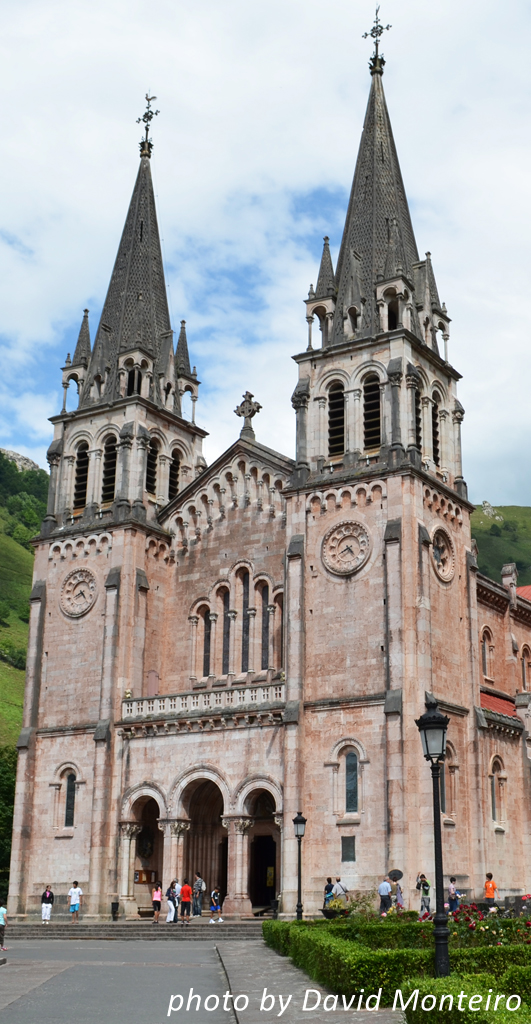
Day 7 - Covadonga and Cangas de Ónis - A visit to Covadonga and Cangas de Onis is “mandatory” to know the region.
Covadonga is an extremely important site of the medieval Iberian history and you will also walk along its gorgeous lakes.
Day 8 - Return to Madrid - Driving to Madrid will give us the opportunity to spend some time in Leon, one of the fundamental kingdoms of medieval Spain. In 1188, the city hosted the first Parliament in European history.
Is also part of the Way of St. James (Camino de Santiago).
Day 9 - Departure from Madrid - You will be taken to the Barajas Airport.
DSC_1910
LODGING LOCATIONS
Day 1 – Madrid - You will be arriving at the welcoming city of Madrid.
Day 2 – Caín - Cain is a tiny village in the heart of the Picos de Europa, with stone houses, located in the province of Leon, crossed by River Cares and is the place from where we will walk the Cares Gorge.
Day 3 – Poncebos - In this hidden location between mountains lies the dam and the Funicular of Bulnes. The funicular will help us easier the next day’s walk. From here we have the possibility to access to the Rio Cares and enjoy its crystal clear waters.
Day 4 – Sotres - After a journey through the interior of the park, getting to Sotres. With about 100 inhabitants, Sotres is the highest Asturian village within the Picos de Europa mountain range and one of the most remote locations.panoramica015
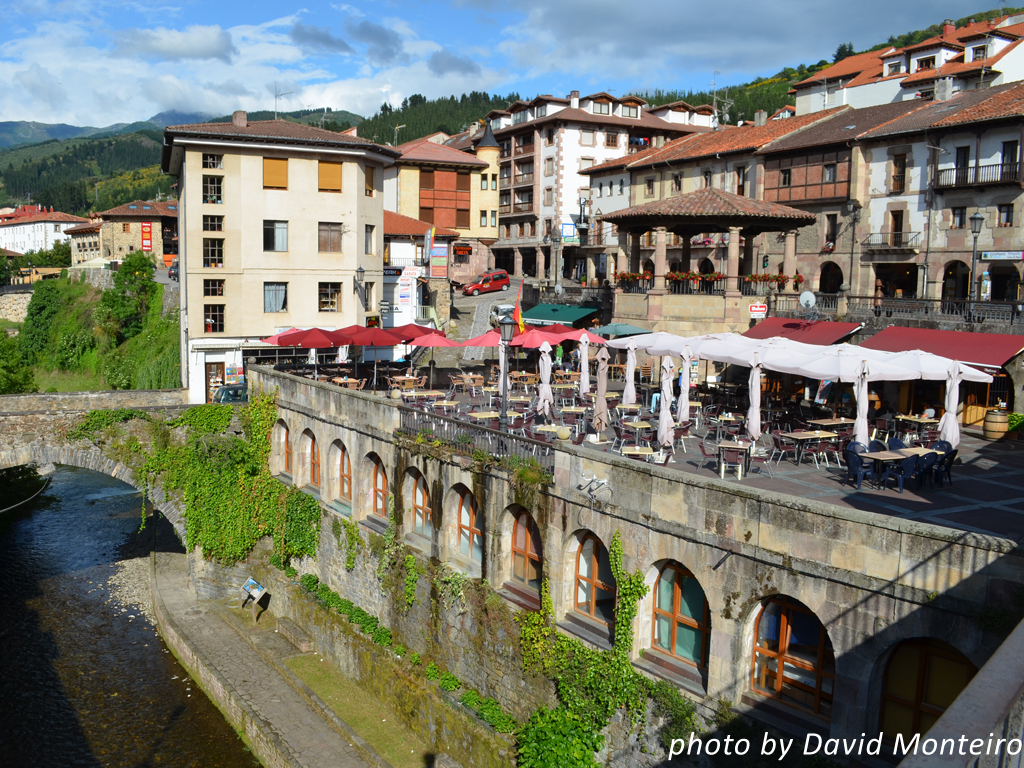
Day 5 & 6 – Potes - Potes, this Cantabrian village is one of the best known in the region and is also a mandatory stop location.
Its historic center is formed by narrow animated streets by trade and local products. Tourists do not resist photographing its narrow streets and find every little detail. Despite a major fire in the late ‘30s, that almost destroyed the village, today’s the historic center of Potes is considered a Cultural History Site.
Day 7 – Cangas de Ónis - It was the capital of the Kingdom of Asturias until 774DC also has happened here in 722 the Battle of Covadonga where Don Pelayo won the Moorish occupants. More recently, in 1978, the city became again the capital of the Principality of Asturias.
Day 8 – Madrid - Your last night will be spent in Madrid. If you decided to stay a few days more enjoying the city so we will say goodbye. Otherwise on the day after we will take you to the Airport.
TOURS IN 2013
Tour Dates / Reservation Deadline
14th to 22nd June / 16th April
21st to 29th June / 23rd April
20th to 28th September / 23rd July
27th September to 5th October / 28th July
or gather your group at select the schedule with lower prices, ask me :)
WHERE WE WILL BE WALKING
In the red circles of the map below, you can find the locations where we will be lodged during the tour, covering the most emblematic regions of the Picos de Europa.
The walks and other activities will take place in between the red circles.
TYPICAL STRUCTURE OF A TOUR DAY
08:00/08:30 - Breakfast.
09:00 - Departure for the day’s activities.
09:00/16:00 - Activities of the day as per Detailed Program, including meal times.
16:00 - Arrival at the accommodations.
16:00/19:00 - Free time.
20:00/21:00 - Dinner.
There is a schedule for each day, as per the Detailed Program, however the Guide will follow it in a relaxed way.
Naturally, the structure is only indicative and each day will follow its specific schedule.
gastronomyQUESTIONS & ANSWERS
How does it works?
Reservation forms and respective payment will be received until Reservation Deadline. Reservations are only considered effective with the respective payment.
If the minimum number of clients required for a tour is not fulfilled until the day after the Reservation Deadline I shall promptly return the Reservation fee in full.
If the minimum numbers of clients required for a tour is fulfilled on the day after the Reservation Deadline I will contact each client in order to receive the remaining values, as per “Price and Reservations”.
I will provide all required information’s in order to help client’s to prepare their travel.
Clients will be meet at the Madrid Airport upon their arrival and, at the end of the tour, they will be taken to the airport as well. Different arrangements will be agreed case-by-case.
Accommodations
Eight nights in doble or twin room are included in the tour base price.
The chosen accommodations are small rural or mountain hotels usually classified as 2 stars or higher. Despite its simplicity of services, these sites have usual facilities such as private bath.DSC_1450
If you want to spend extra nights at the starting or ending location of the tour, ”Montes e Vales” can provide you quotations for accommodations and other services that you require. If you want to hire services on your own, “Montes e Vales” will provide all liaison information’s you may require after confirming your reservation.
Meals
There will be three meals included in each tour day: breakfast, lunch and dinner. Please note some exceptions for the first and last days of the tour.
Breakfast: served by the hotel/accommodations where you will be lodged – from Day 2 to Day 9, breakfasts are included in the Base Price.
Lunch: depending of each tour day, lunch can be picnic style or in a local restaurant – from Day 2 to Day 8, lunches are included in the Base Price with no alcoholic drinks included.
Dinner: usually in a typical local restaurant with a “menu” regime, including one glass of juice, wine or beer – from Day 1 to Day 8, dinners are included in the Base Price.
Special arrangements will be dealt separately.
Specific dietary needs will be taken into account. Please refer your dietary requirements on your Reservation Form.
All tastings referred in the Program are included in the Base Price.
Luggage and backpack
Each client has a volume/weight luggage quota of 60 liters and/or 30Kg.
During the time of the walks or other activities you will have with you what you will need for the day. In the meantime your luggage will be taken to the hotel or will stay there depending if it’s a transfer day or not.
To carry your belongings during the walks or other activities you will need a 20 to 25liters backpack.
Clothing, footwear and other individual items
We will be glad to provide you all the information you may need to help you to better prepare your travel.
Logistics and general support
There will be a logistical support vehicle allocated to the tour. All needed transfers listed in the detailed program are included in the tour price.
The walks were created to be Moderate Level, accessible to any person with any regular physical activity such as walking.
Throughout the day the support van may or may not be accessible because most of the walks will happen in trails where motorized vehicles can’t be used, except for emergency proposes.
So, by the time you will arrive to the hotel your luggage will be there waiting for you.
Detailed Program
The Detailed Program is part of the documentation that the participant receives when the trour is confirmed.
Plane flights
You can purchase directly your plane flights or through our travel agency partner, is your choice.
We will be glad to provide the respective quotations.
Please bear in mind: last minute reservations can result in increased costs and booking difficulties.
PRICE and RESERVATIONS
Tour Base Price - 1.650€
Includes: Accommodation (8 nights in double/twin room), breakfasts from Day 2 to Day 9, lunches/picnic from Day 2 to Day 8, dinners from Day 1 to Day 8 at menu regime, personal accident insurance, transfers from and to Barcelona Airport plus transfers between activities locations and all the tastings and guided visits referred in the Detailed Program.
Does not includes: plane tickets and everything else that is not expressly mentioned as included in this booklet.
Single room suplement: 200€
Reservation value and procedure: 600,00€ - Remaining amount paid in full until 15 days after Reservation Deadline.
CANCELLATION
The costs of cancellation are as follows:
90 days before 1st Tour Day – 0% of reservation
89-60 days before 1st Tour Day – 25% of reservation
59-45 days before 1st Tour Day – 50% of reservation
44-30 days before 1st Tour Day – 75% of reservation
29 days or less before 1st Tour Day – 100% of reservation
To cancel your reservation it is mandatory that an e-mail is sent from the same e-mail address used for the reservation. The amount will be transferred back to the same account used to the reservation.
Number of clients: Mín 6 and max 14 guests per tour.
INFORMATIONS AND RESERVATIONS:
e-mail: david.jose.monteiro@gmail.com
Telephone: +351 914 794 553
In case you have any questions don’t hesitate to call me or send me an e-mail, I’ll be glad to help.
All your questions are important.